Weak or manual product recommendations
Bolt-on recommendation apps break when the catalog changes
Maestra Platform reads the catalog directly, the all-in-one retention marketing platform for ecommerce brands, maintained by your forward-deployed marketer.
27%
reduction in marketing stack costs
Brands running on Maestra






The problem
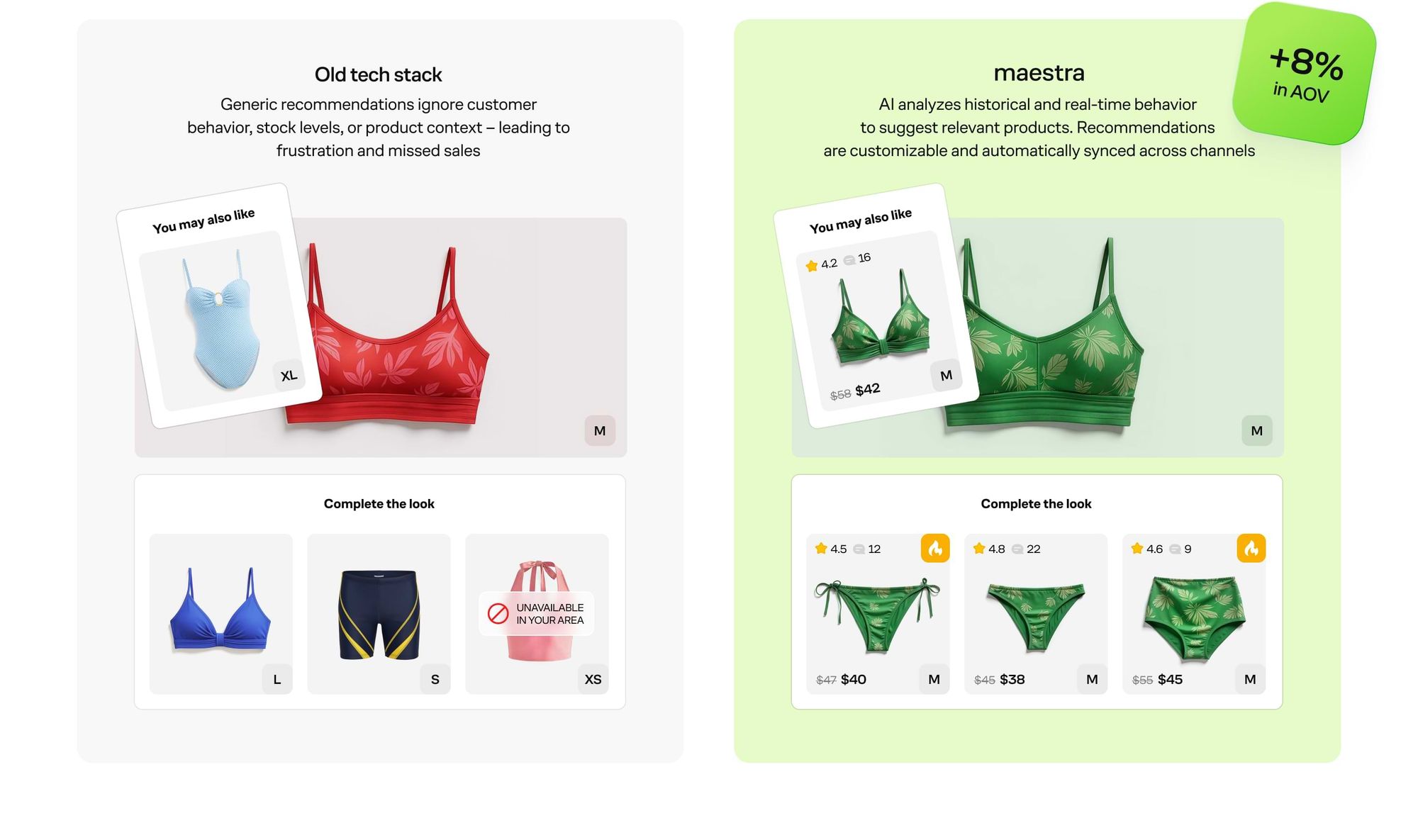
Merchandising by hand doesn't scale past a handful of SKUs
Someone on the team is still hand-selecting which products show up in each recommendation slot, one placement at a time. It works for a small catalog, but every new SKU adds more manual work, and most of the catalog never gets a proper recommendation at all.
What we hear from brands
a leather handbag brand's small ecommerce team manually manages merchandising and A/B tests, limiting scale
an automotive parts retailer describes manual, time-consuming setup of upsells and bundles as SKU count expands
a men's grooming brand cites underperforming product pages and lean team bandwidth for testing and optimization
The new way
Recommendations powered by full-funnel data, not just page views
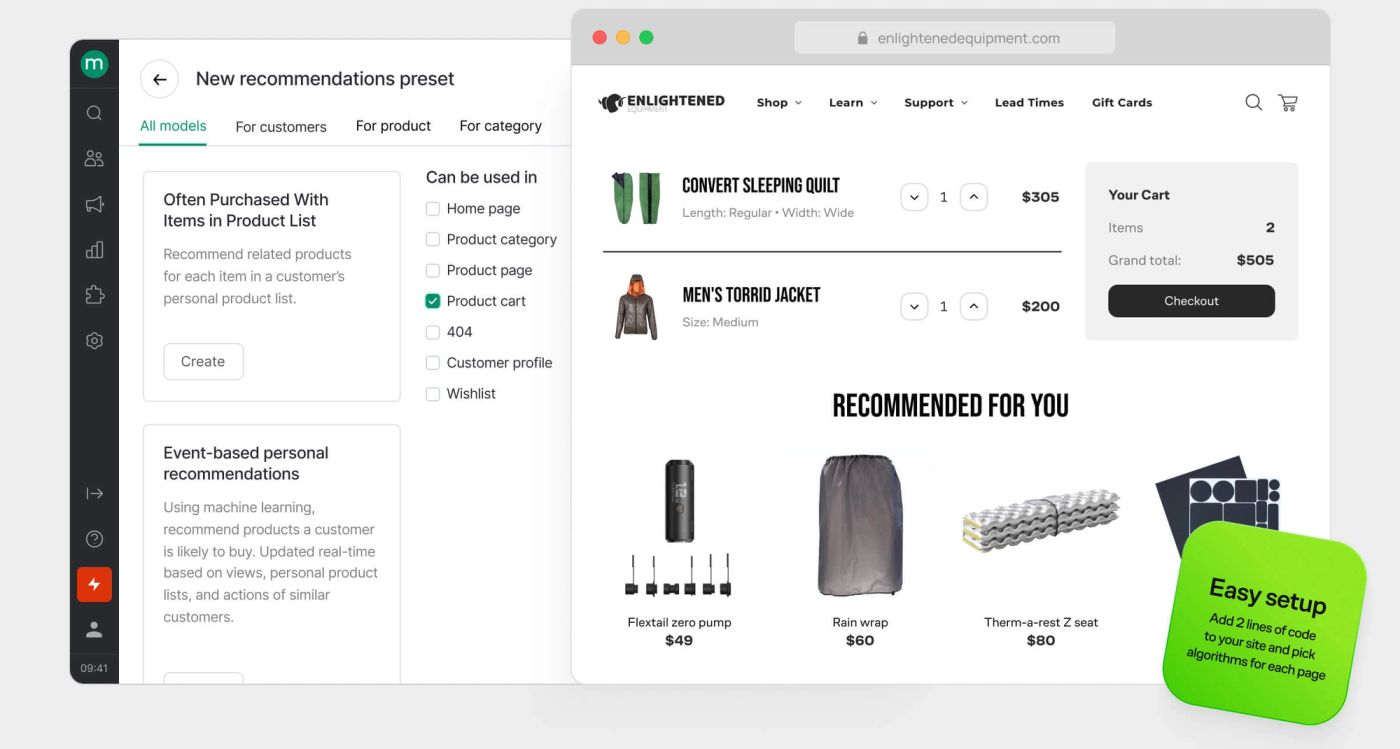
Maestra's recommendation engines run on real-time CDP data: browsing, demographics, and purchase history combine to update suggestions instantly, even for anonymous visitors. Every click sharpens the next recommendation, so the picks a returning customer sees reflect everything they've done, not just their last session.
Outcomes brands report
Customer proof
When the catalog is confusing, ask instead of guessing

Recommending bedding without knowing the bed is guesswork. A short quiz collects what the engine needs, and a fifth of the people who start it leave contact details as well.
 Read the full case study
22.6%
of people started the quiz provided email and a phone number
How it works
Your old stack is the safety net
Keep it running
Nothing is switched off at the start. Both setups exist side by side while the new one is proven.
Compare before you commit
You see the rebuilt flows and segments against the ones you know before anything is pointed at customers.
Turn it off on your terms
The old contracts end when you say so, not because the migration forced the date.
The platform
What the platform knows about a shopper
Orders, browsing, campaign response, and offline touchpoints land in the same profile as they happen. Nothing waits for an overnight job, so the segment a campaign uses is the state of the customer right now.
Your forward-deployed marketer
The difference between advice and implementation
An agency sends recommendations and an invoice. Your marketer opens the platform and builds the thing, which is why the improvements that are technically easy but always postponed actually ship.
Work delivered in the platform, not as a deck
The postponed improvements get shipped
No separate services fee
Replace your stack
Migrating off does not mean starting over
The programs you have been refining for years are rebuilt, not discarded, and the history comes with them, so the reporting still reaches back past the switch.
Replaces
Klaviyo
Sendlane
Optimizely
Bloomreach
Attentive
Bring your stack to the conversation
The useful version of this discussion starts from the tools you run now and what each of them would be replaced by.